Showing posts with label CNC Router. Show all posts

Sunday, October 18, 2009

Avoid Release of Magic Smoke - Read the Documentation


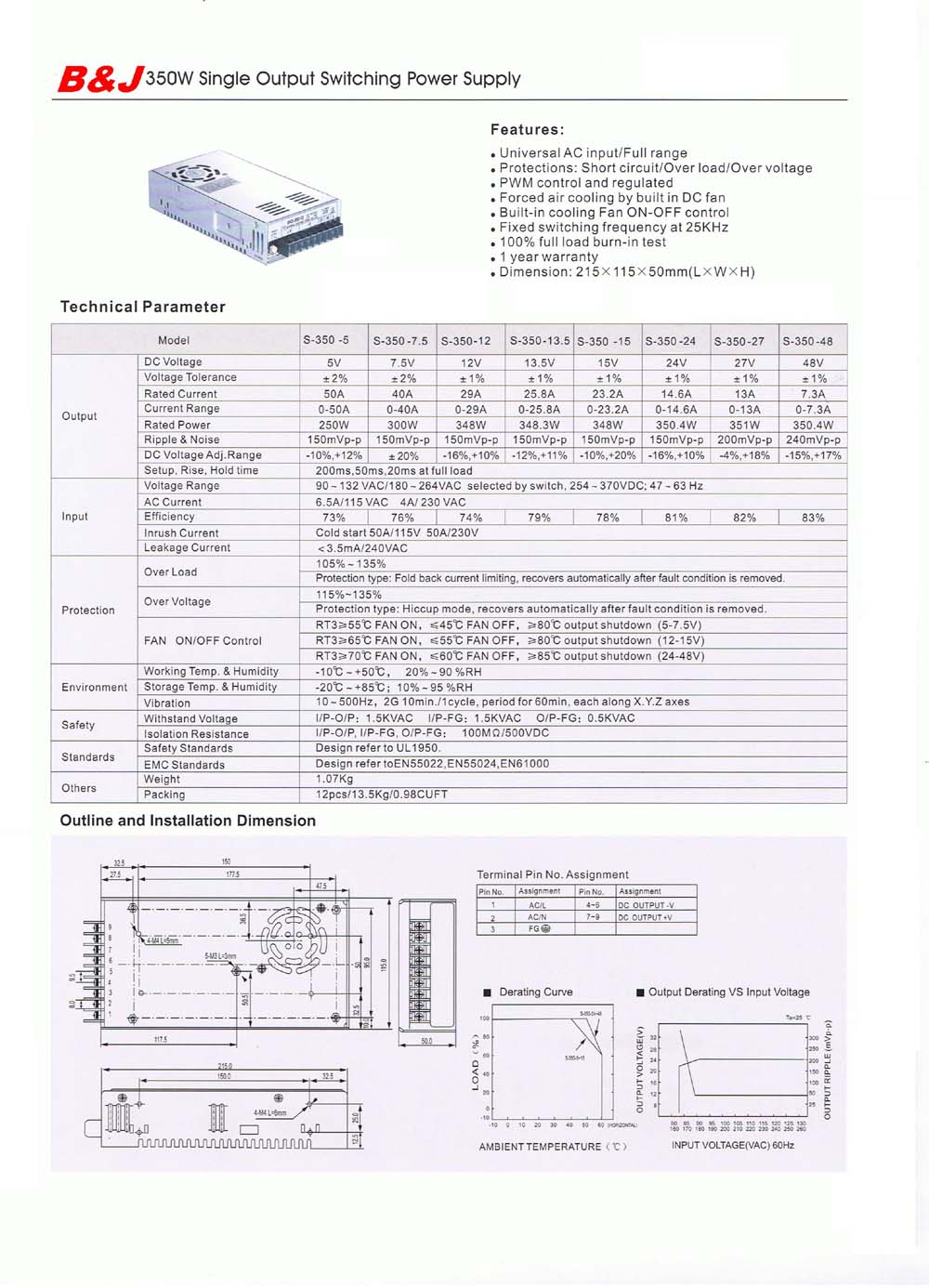
While awaiting the delivery of the CNC Router kit one of the best uses of my time is to get the CNC Controller setup, configured and tested. When working with any type of electronic device it is important to avoid releasing any of the magic smoke hidden within. When the magic smoke is allowed to escape from an electrical component it usually ceases to work, clear evidence of the importance of the magic smoke to its proper functioning.


One of the best ways to avoid the inadvertent release of magic smoke is to make sure everything is connected correctly before applying power. To this end I will carefully review the following documents:

Thursday, October 15, 2009

Electrical Components Arrive

Arriving home from work today I was pleased to find my CNC Router Parts order had arrived. As mentioned previously this past Sunday I placed an order for the stepper motors, power supply, cables and Gecko G540. Ahren at CRP apparently got the order out right away and made the necessary arrangements for a prompt delivery by a uniformed agent of the Federal government.

No excuse now for not making some progress this weekend.

Monday, October 12, 2009

CNC Spending Spree

The past 24 hours has been significant for this project. I made the BIG purchase decisions and pulled the trigger. The Project Cost Sheet has been updated and a big chunk of the budget has been expended.

I placed an order with Fine Line Automation for the FLA100-00 Complete 2x3 Router Kit. This kit includes all of the hardware to build the CNC Router described in this post. The kit includes everything needed in the following categories:
  • Fasteners
  • Power Transfer Components
  • Linear Motion Components
  • 80/20 Aluminum Extrusion
I also placed an order (actually yesterday) with CNC Router Parts for the electronics kit for the project. This includes:
  • Stepper Motors (3)
  • Parallel Cables
  • Gecko G540
  • Power Supply (48v/7.3A)

When the electrical items are delivered the process of setting up and configuring the CNC Controller system can begin. We are on or slightly ahead of the Project Schedule so far.

My goal for the remainder of the week is to build the PC that will be used for the CNC Controller. I am also considering using EMC2 under the Linux OS. Nate at Fine Line Automation mentioned in an email that he uses EMC2 rather that Mach3. I have found some information on how to create a bootable ISO image of Linux and EMC2 on a CD. It will either work or not. It seems worth a try before spending money on an OEM XP license and purchasing Mach3. My brother Vern has volunteered to provide 'phone support' on the Linux install. I will post on progress on the PC build soon.

Saturday, October 10, 2009

CRP/FLA-100-00 CNC Router

This is another image of the CNC Router built by Glacial Wanderer which I mentioned previously here. It uses the linear motion hardware from CNC Router Parts. I have also mentioned the plans for the CRP/FLA-100 CNC router are available free of charge in this post.

I refer to this as the CRP (CNC Router Parts)/FLA (Fine Line Automation)100-00 because this is the result of a collaboration between Ahren Johnson owner of CRP and Nate Lowrie proprietor of Fine Line Automation. From what I have gathered Nathan has joined in a partnership with Ahren to provide kits and component bundles for their CNC machine designs, the 100-00 being the first, that utilize the components offered by CRP, including the CRP linear motion carriages and rails. I imagine that Ahren provides the CRP specific components and Nate combines them with other hardware into convenient kits and bundles for builders like me. Since I hope to buy a kit I will just refer to this machine from now on as the FLA100-00 since Fine Line Automation is the kit supplier. You can find information about the FLA 100-00 here, including a link to download the open source plans.

The usable cutting area of the FLA100-00 is 24"x36". The frame is built from 80/20 aluminum extrusion and could be a bench top or free standing machine. It has only one drive for the gantry (three motors total), which is adequate for a 2' wide gantry. It utilizes ACME thread lead screws. This type of lead screw is much better than 'all thread' bar used by some basic machines built by hobbyists, but is not as efficient (or as expensive) as ball screws. It is a suitable choice for a mid-level machine. There is an informative build report by Matt Taylor that indicates that machine accuracy is adequate for my needs and recent improvements in the couplers provided in the kit may result in less backlash in the drive line thus improving the accuracy and repeatability reported by Matt.

The other important aspect of the design is the use of the CRP linear motion carriages and rails. The carriages utilize skate bearing along cold rolled plate rails. The cold roll process inherently produces a smooth consistent plate thickness and surface. This inherent accuracy is utilized by Ahren's carriage design. The rails could be surface ground for even greater flatness, etc. It is an cost-effective combination of readily available parts and materials combined to good advantage. I have some concern about debris on the rails causing problems, but a simple rail wiper/brush setup could mitigate this if there is a problem.

The complete ready-to-assemble kit, not including the stepper motors, is $1,300. The machine fits all of the criteria I established earlier here. Yes, I am stoked!

I agree with Matt Taylor's evaluation that this machine has found a good balance of cost and performance. Almost as important to me is having a complete ready-to-assemble kit that requires few if any specialized processes or tools that can be assembled quickly before, due to my short attention span, I loose interest in the project.

What do you think of this design?

Friday, October 9, 2009

PDJ Inc. Pilot Pro Dual Drive CNC Router


PDJ Inc. offers the Pilot Pro CNC Router. It can be built using 80/20 extrusion, steel square tubing or a combination of these materials as shown in the photo. The standard cutting capacity is 24"x26" but there is the potential to extend the bed length. The system appears suitable for a 690 or smaller router. The machine uses precision rails or rods for the linear motion and ball screws. These are higher end components and it is reflected in the price of the machine. A fully assembled machine is $4,350. A complete kit that includes the four stepper motors is offered at $3,250. The aluminum parts in the kit come with the hole centers 'pecked' but final hole drilling is done by the builder. Parts can be purchased in bundles. To give an idea of how the precision rails and balls screws affect the price of this router the set of rails and Z rods can be purchased separately as a set for $995. The ball screw set for the system is $510.
I purchased the Plans DVD for $34. The disc includes informative 'screencast' videos on various aspects of CNC. There are designs for multiple configurations of the machine, plus designs and information in many other items (including a ice cooler-based cat house) and component data sheets. It is a good source of information for a newbie like me. The Plans DVD is a good value.
I really like the 'professional' grade components - the 20mm rails and ball drive screw, but given the capacity of the machine it is a pricy package.


Thursday, October 8, 2009

Joe's 4x4 CNC Router

It didn't take long lurking at the cnczone.com forum to notice that Joe's 2006 and Joe's 4x4 Hybrid CNC routers were the topic of many threads. The 4x4 Hybrid is the latest design by Joe.

Joe made a significant contribution to the home brew CNC community by developing the the 2006 design and making them available free of charge. They can be found here. Joe offers a partial kit for both the 2006 and 4x4 Hybrid . The 4x4 Hybrid plans are available for $100 at Joe'sCNC.com.

I purchased the 4x4 plans and joined the private forum. What I received was a set of quality design drawings (assembly and detail parts) in a 27 page .pdf file. This document also included a fairly complete Bill of Material (BOM) with source information. At first I was disappointed that there was no assembly instructions, but I soon realized that the many build logs in the private 4x4 forum provide extensive information on the build process.

The machine is a 'hybrid' in that it combines steel uni-strut (for the base), 80/20 aluminum extrusion, MDF, and HDPE components. It has dual gantry drive lines and has a cutting area of 4'x4' (who would have thought!). It is a clever combination of materials resulting in a capable machine for a reasonable cost.

The private forum is very active and supportive from what I have observed. Some participants have contributed supplemental information such as a very complete Super BOM spreadsheet that includes some parts not included in the basic BOM and parts and sources for common options and alternatives.

There are build logs for many completed and in-process builds. Some have chosen to scale up the design to 8x8 or down to a 2x4 size, which would be my course of action due to my limited shop space.

Joe offers a kit of CNC routed MDF and HDPE parts, but the base, frame, rails and so forth require sourcing and some fabrication by the builder. The linear motion systems uses steel angle for rails and 'V' bearings.

I am very impressed with this design and the diligent support given it. It is a bit bigger than I would want given my space constraints and I would prefer a complete ready-to-assemble kit. The cost to build this machine would fit within my allocated budget.

Monday, October 5, 2009

CNC System Diagram


Updated 10/26/2009


This post will be a sticky post since I expect this diagram to change as I learn more about what I am doing.


CAD/CAM Workstation


I will be using an existing PC to create 2D and 3D geometry using CAD and other applications. This system will also host any CAM applications used to program tool paths and to generate the G-Code files. The resulting files will be transfered to the CNC Controller by sneaker-net or using our wireless network.


CNC Controller


I am most uncertain about this portion of the system. As best I can tell the "CNC Controller" will consist of a PC running CNC Controller software, such as Mach 3, and a hardware controller box that has a Power Supply, a break-out-board and stepper motor drivers. I have more to learn about the function of the break out board but it includes isolating the PC from the high current and voltage being sent from the drivers to the stepper motors.


The Controller PC and Controller Box are connected through a parallel interface. I am planning to dredge out a decommissioned mother board and CPU from the closet and build up a PC dedicated to this CNC Controller function. I have a spare NEC LCD monitor for this system. These will live in the garage/shop with the controller box and router.


Stepper Motors


The stepper motors are connected by cables to the controller box drivers. Depending on the router design there will be either 3 or 4 stepper motors. The Y axis can be driven by dual motors or a single motor.


Machine Tool


The stepper motors are attached to the machine tool and its lead screws. The rotation of the lead screws move the gantry and carriages which hold the router spindle along their axis.

Sunday, October 4, 2009

Every Project Needs a Plan


This image is from a 3D model of the CRP 100 router. It uses a linear motion mechanism that I am really impressed with. This hardware is sold by CNC Router Parts and plans for the CRP 100 are free to download! It is a design that makes excellent use of the characteristics of the materials used. It is likely that we will be looking into these linear motion mechanisms in future posts.

Now to the subject at hand. It is time to think a bit about what this project involves, at least in outline. I have a general idea of the main pieces needed, so let's begin. We can fill in the details as we go along.

First, I am thinking it would be nice to use the Thanksgiving holiday to assemble the actual CNC Router. If things go well in the assembly and setup perhaps a turkey carving attachment could be designed. This would create great excitement around the table! However, I would hope to just get the basic assembly complete during that week.

I have pretty much decided that a kit would be the best approach for me rather than having to source all parts and materials and building from plans. Based on what I have seen so far CNC kit purveyors require up to 4 weeks of lead time to deliver a kit. Many of the businesses that serve the hobby CNC market are cottage industries that probably order their material only after receiving a firm customer order. This would mean making my final decision and placing an order no later than mid-October for a kit (i.e. in the next week or so). That is a useful data point. I will need to structure my plan so that I make good use of the 4 weeks of waiting time. Otherwise this will be a very slow moving blog and project.

Here are the major capabilities, activities or items that need to be in place for a complete system:
  • Create Part Geometry (2D and 3D) - CAD and Drawing Applications
  • Create Tool Paths and G-Code Files - CAM Application
  • PC-based CNC Controller - Hardware and Software
  • CNC Power Supply and Drivers
  • Configure and Test Controller/Driver/Stepper Motor Sub-System
  • Build Router Stand/Table
  • Router Machine Assembly and Setup
  • Testing and Tuning

I will detail out a project plan and get it posted this week. It will be fun to watch the plan depart from reality as things go along!

Saturday, October 3, 2009

What is a CNC Router?

It occurs to me that some family and friends looking into this project may not be familiar with what a CNC Router is, and that is very understandable. Not everyone dreams of having a screaming computer controlled routing machine in their garage creating piles of dust.

Above is a picture of one of the CNC routers I have been considering for this project. It is a PDJ Pilot Pro router with dual gantry drives. It is available from pdjinc.com. There is the option to build this router from plans, purchase a kit, or purchase a fully assembled router from PDJ Inc.

The workpiece is held on the bed of the router. Stepper motors, under the control of the computer (this is where the Computer Numerical Control part comes in), precisely move the router spindle and bit into the workpiece to cut the material. The physical motion is controlled by the rails of the machine which restrict movement along three axis; x, y and z. The result is the router cutting or carving the workpiece into the designed shape.
Here is a video from Youtube of a Joe's 4x4 Hybrid CNC router. It is a bit larger than Pilot Pro mentioned above. I have also been evaluating the plans for this router. More on that in an upcoming post. The router is cutting signs for a doctor's office in what looks like a urethane foam or MDF material. Signage is one of the most common items made using a CNC router. In spite of the video title this is not 'My' CNC Router but someday I hope to have one like it!


CNC Power to the People!

It was the early 1980s and I knew something significant was afoot when I began to use the new and highly coveted Apple Laserwriter printer. My department within a large aerospace company had diligently worked to justify the purchase of this printer, which as I recall cost in the neighborhood of $5-6K. Suddenly I was no longer dependent on the department secretary and her IBM Selectric typewriter to create a professional looking document. In fact, the output quality of a Selectric became sub-standard in comparison to the near typeset quality of the Laserwriter. I was joining the Desktop Publishing revolution. The result of this technology shift was the creation of way too many bad newsletters by empowered, but sometimes un-artful, individuals. But today hardly a thought is given to how much power we have to create sometimes amazing printed material with common and affordable tools.

During the 1990s another computer-driven revolution was underway - CNC (Computer Numerical Control) for the individual! Increasingly one could build or otherwise acquire the tools needed to design an item and manufacture it using CNC. Capability that in the past was reserved for only well capitalized manufacturing businesses was becoming available on a personal scale.

I have dabbled with the prospect of adding CNC capability to my shop arsenal for years, but now the time has come and I have much to learn. This blog is about my process of learning about, planning for, acquiring, building and using my own CNC Router system - from CAD to chips. Let the transformation from CNC 'Newbie' to 'not-so-Newbie' begin!